How is the Datejust line recorded in the catalogue?
Case size is recorded on 26 of 35 references (13 at 36mm, 13 at 41mm) and 9 carry no size in the record. Bracelet is recorded on 27 (23 Jubilee, 4 Oyster) and 8 carry none. Where a field is missing we print it as missing — the blanks below are the record, not a mistake.
Which Datejust references are in the catalogue?
| Reference | Listings | Case | Bracelet | Dial / finish | Price |
|---|---|---|---|---|---|
| 126200 | 2 | 36mm | Oyster | Wimbledon, Sunburst Blue | $980 |
| 126231 | 2 | 36mm | Jubilee | Two-Tone Everose Slate, Slate Grey Fluted Motif | $1,005 |
| 126233 | 1 | — | — | Two-Tone Yellow Gold | $1,005 |
| 126234 | 12 | 36mm | Jubilee, Oyster | Silver, Olive Green Diamond, Sunburst Green +8 | $980–$1,005 |
| 126283RBR | 1 | — | — | Two-Tone Yellow Gold | $1,030 |
| 126300 | 3 | 41mm | Jubilee, Oyster | Blue Sunburst, Black | $980 |
| 126331 | 1 | — | — | Wimbledon Two-Tone Everose | $1,005 |
| 126333 | 1 | 41mm | Jubilee | Two-Tone Yellow Gold | $1,005 |
| 126334 | 11 | 41mm | Jubilee | Gradient Green, Slate Grey Diamond, White Roman +8 | $833–$1,030 |
| — | 1 | — | — | Chocolate | $1,005 |
Each reference in the table opens one representative listing, and the dial wording is lifted from the listing titles — the product record's own dial field is empty for this line, and we would rather say that than fill it in from a guess. Where only one dial is shown against a reference, we carry only that dial for it.
1. How do you read a Datejust reference number?
The reference number is the identifier that matches a watch to the one you actually want, and in our record a pattern runs straight down the table: the 1262xx references are the 36mm cases and the 1263xx the 41mm ones, with the trailing digits marking the metal and bezel combination. If you are offered a "Datejust 41" and the reference does not follow that pattern, ask about it before anything else.
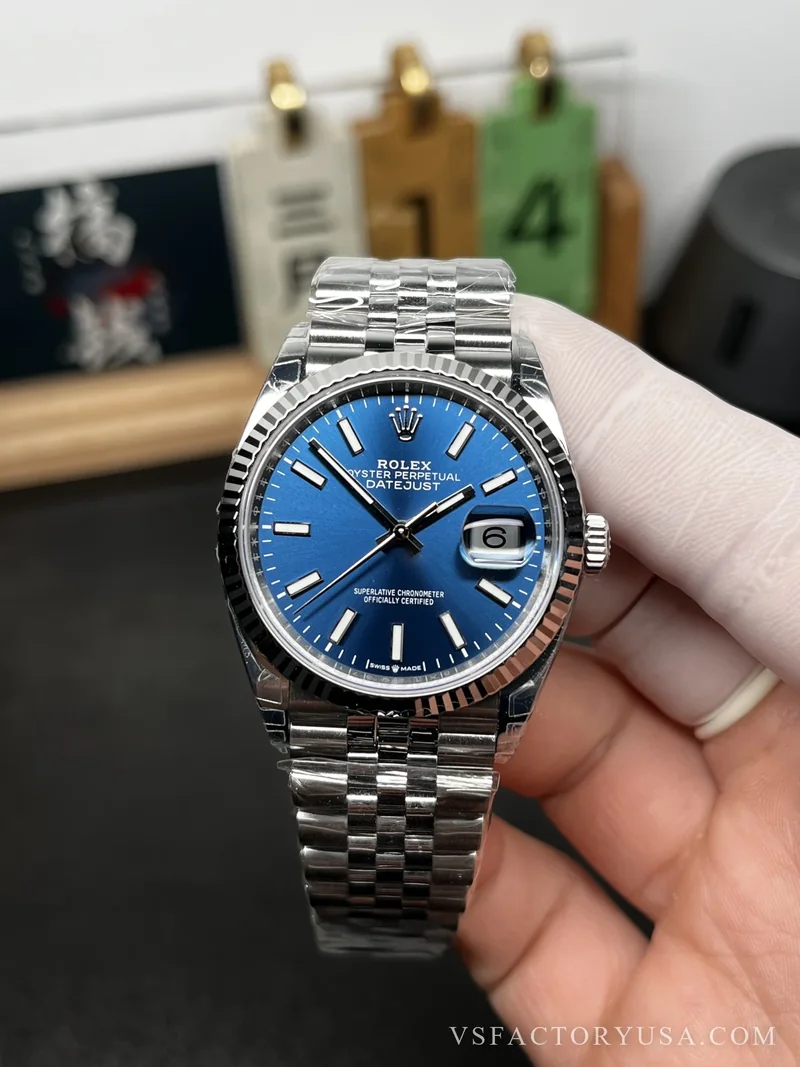
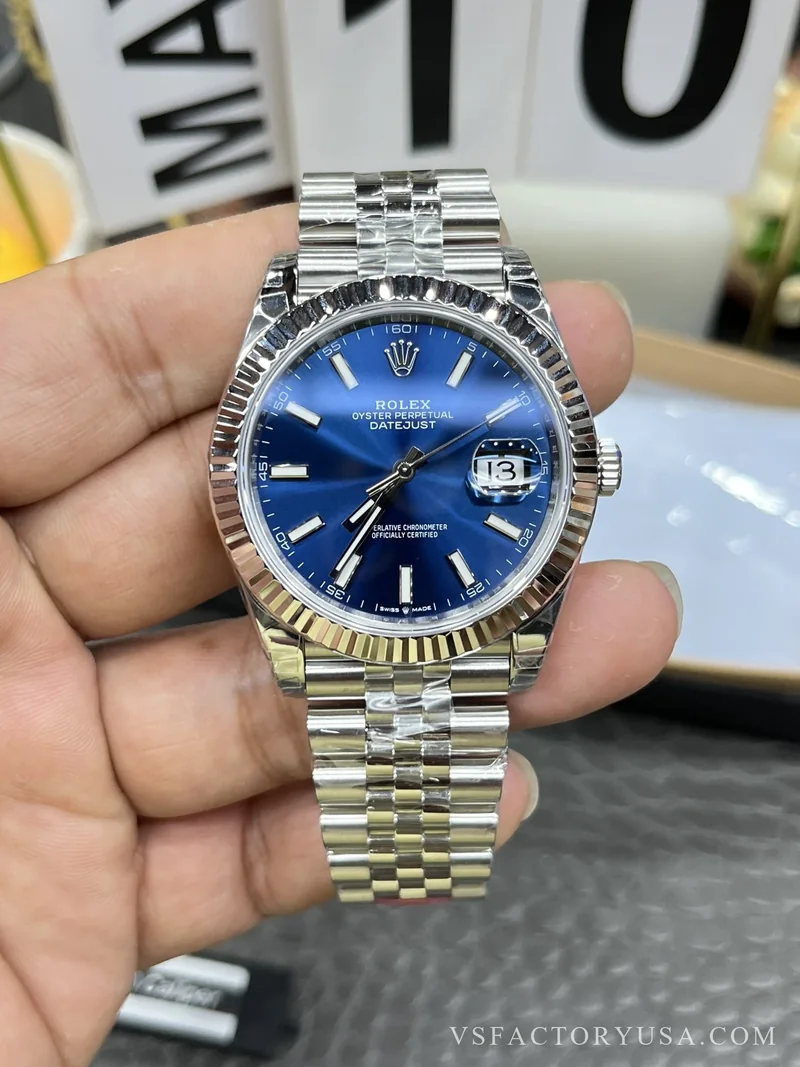
The dial column matters for the same reason. Two listings under one reference can be different watches to live with — that is the whole of the choice.
2. Which calibre is fitted to the 36mm and 41mm Datejust?
Every Datejust listing here, 36mm and 41mm alike, is recorded as the DD3235 Movement. The number is the calibre it is built to copy — the current no-complication Rolex calibre — and the letters are the family that built the clone, in the same scheme set out on the movement code page.
What that means practically: between the two case sizes, the calibre designation does not change. The difference you are choosing between is the case, the dial and the bracelet. And we publish no beat rate, power reserve or accuracy figure for it — see the movement guide for why a figure we have not measured is worse than no figure at all.
3. What can a "versus gen" comparison actually show?
There is a whole genre of comparison content in this trade, and most of it cannot support the conclusion it draws. A photograph taken from two different distances, at two angles, under two lights, then viewed on two screens, cannot tell you a dial is a shade off. The community says this itself: the most-quoted line on the forums about a well-known head-to-head is that the difference in finishing is "so minute it is like staring at two white walls".
So this site does not publish gen comparisons. What it publishes is the part that can be checked: reference, case size, bracelet, dial as recorded, calibre designation, price — and, per order, photographs and video of the actual watch. That last one is the only comparison that has your order in it.
4. Do these listings carry a serial number?
Our listings print the reference, not a unique serial. A case serial is a marking that varies by batch, and we have not verified it — so rather than print a number we cannot stand behind, the listing states what it can. If you are being shown a serial and told it corresponds to this site, bring it into the chat and we will check it against your order thread. Any seller who resists that check is telling you something.
5. Why do two photos of the same blue dial look different?
Colour is the most photograph-dependent thing about a watch. White balance, the angle of the light, the surface the watch sits on and the calibration of your screen all move a blue dial around, and they move it differently in two studios. A photograph is evidence about a dial; it is not a colour measurement.
The practical consequence is the one worth remembering: judge a dial by photographs of your watch, taken by the people who will pack it, under the conditions they always use. That is exactly what the QC step is — see how to read QC photographs for what to check and at which angles to ask for more.
What does this page deliberately leave out?
No "best Datejust" ranking. No reliability or durability claim for the calibre. No claim about materials beyond what the record holds. No invented specification to fill a blank row. Every figure on this page is counted from the same product data the listings read, and where the data is silent, 18 fields above say so.
What do Datejust buyers ask?
Straight answers, no filler.
How many Datejust references do you list?
35 at the time of writing, across 10 reference numbers, and every one of them is priced on its own page rather than "on request". The table above is generated from the same product record the listings use, so it moves when the catalogue does.
What movement is in a VSF Datejust?
Every Datejust listing in our catalogue is recorded as the DD3235 Movement — 35 of 35. That is what the product record holds, and it is printed on each listing. We do not publish a beat rate, power reserve or accuracy figure for it, because we have not measured those on our own bench.
Is the 41mm movement different from the 36mm?
In our record, no: the calibre designation is the same across both case sizes. What differs between the references is the case, the dial and the bracelet — which is why the reference number, not the movement code, is the thing to match against the watch you want.
Do you publish a VSF-versus-genuine comparison?
No, and the reason is on the comparisons page: we do not own a genuine watch of each reference to measure against, and a side-by-side photograph shot at different focal lengths, angles and lighting is not a measurement. What we publish instead is what can be checked: reference number, case size, bracelet, dial as recorded, calibre designation and price.
Can I check a serial number against your listing?
Our listings print the reference number — the code that identifies the model variant, such as 126234 for a 36mm Jubilee — not a per-watch serial. A serial engraved on a case is a marking we have not verified, and it varies by batch, so we do not publish one for a watch we have not yet photographed. If someone shows you a serial and says it matches this site, ask us in the chat and we will check it against your order thread.
Why do two photographs of the same blue dial look different?
Because dial colour in a photograph is a product of the light, the white balance, the angle and your own screen — not only the paint. Photographs of the same watch taken minutes apart can look like different dials. This is why the QC stage exists: the photographs and video you approve are of your own watch, taken by the same hands that will pack it, rather than a stock image shot under a showroom lamp.
Browse the VS Factory catalogue
Every reference is listed with its factory line, reference number and movement — and shipped only after you approve the QC photos of your own watch. Prices, build class and the movement code are on every listing, and the same QC process is described the same way throughout the catalogue.
View all references